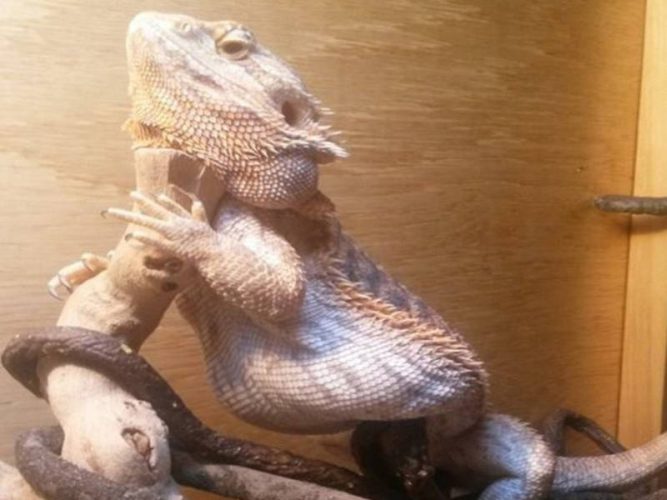
Mouth rot in bearded dragons, also called stomatitis, is a common health issue that can have serious consequences if left untreated.
White et al. (2011) highlight that stomatitis is one of the most common health issues in lizards, affecting nearly 1 in 4 lizards with skin or oral problems, that’s 25%!
While there are different types of stomatitis—bacterial, viral, fungal, and more—this article focuses on bacterial mouth rot. Why? Because it’s the most common form and the one you can often prevent with good care and quick action.
This is part 4 of a 4 part series on bearded dragons teeth, their anatomy, care and diseases:
- Bearded Dragon Teeth: The Essential Anatomy and Biology
- How to Clean Bearded Dragons Teeth: A Simple Guide
- Problems with Bearded Dragons Teeth & How to Fix Them
- Mouth Rot in Bearded Dragons: What It Is and What Can I Do For It? ⏪you are here
Read more…
What Causes Mouth Rot in Bearded Dragons?
Unfortunately, mouth rot in bearded dragons happens because of something within our control. Here are the key culprits that can lead to bearded dragon mouth rot:
| Cause | How It Contributes to Mouth Rot |
| Poor Oral Health and Dental Disease | Bearded dragons have acrodont teeth attached directly to their jawbone, making them more vulnerable to periodontal disease. Over time, food particles and bacteria can build up around their teeth, causing gum inflammation that eventually leads to bearded dragon mouth rot if left untreated. |
| Overcrowding or Small Enclosures | Cramped spaces cause stress and increase the chances of physical injuries. These conditions also promote bacterial buildup, making bearded dragons more prone to infections like mouth rot. |
| High Humidity or Moisture | Excessive humidity creates an environment where bacteria and fungi thrive, especially in a bearded dragon’s mouth. This can directly lead to bacterial overgrowth and mouth rot in bearded dragons. |
| Wrong Temperatures | If the tank is too cold or the basking area isn’t warm enough, it weakens your bearded dragon’s immune system, making infections like mouth rot more likely to take hold. |
| Unsanitary Conditions | Dirty or unmaintained enclosures allow harmful bacteria like Aeromonas and Pseudomonas to thrive. These pathogens can invade your bearded dragon’s mouth, leading to infections and eventually mouth rot. |
| Physical Trauma | Bearded dragons are naturally curious and may rub their faces on rough surfaces, chew on sharp objects, or get injured by live prey. These tiny wounds in the mouth create openings for bacteria like Aeromonas and Pseudomonas to invade and cause mouth rot. |
| Mites | Mites feed on a bearded dragon’s blood, weakening their immune system and making them more vulnerable to infections. This can significantly increase the chances of developing mouth rot in bearded dragons. |
| Bacterial Overgrowth | Poor hygiene in the tank creates a breeding ground for bacteria. Aeromonas and Pseudomonas are two common culprits that thrive in these conditions, causing infections that lead to bearded dragon mouth rot. |
Types of Infections That Cause Mouth Rot in Bearded Dragon
Stomatitis, commonly known as mouth rot, occurs when infections take hold in a bearded dragon’s mouth due to poor conditions or underlying health issues. Here’s a breakdown of the types of infections that can cause mouth rot:
| Cause | Signs & Symptoms | How It Happens | Treatment |
| Bacterial Infection | Red gums; pus pockets; loss of appetite; swollen mouth tissues | Overgrowth of bacteria (Aeromonas, Pseudomonas, etc.) in unsanitary conditions or after mouth injury | Antibiotics (e.g., cephalosporins), antiseptic cleaning (chlorhexidine), and supportive care. |
| Viral Infection | Painful mouth sores; difficulty eating; lethargy; yellow lesions | Herpesvirus or other viruses triggered by stress or illness | Antiviral medications (like acyclovir); symptom management and supportive care. |
| Fungal Infection | White or gray fungal growth; tissue damage; worsening untreated infections | Secondary to untreated bacterial infections; linked to poor hygiene or overly moist conditions | Antifungal medications (topical and systemic), cleaning infected areas; supportive care. |
| Parasitic Infection | Inflammation and irritation; mucus in mouth; difficulty breathing | Parasites burrowing into mouth tissues; common in wild reptiles | Veterinary removal of parasites; symptomatic treatment to reduce inflammation and discomfort. |
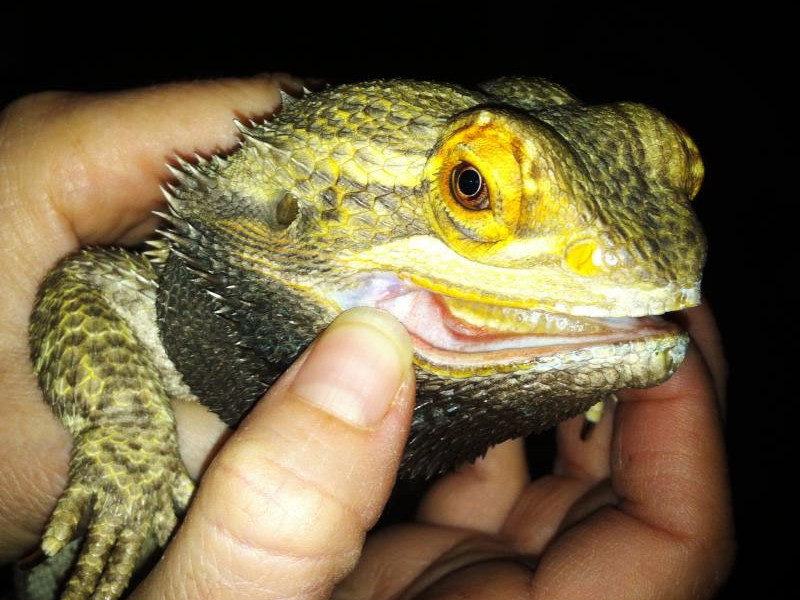
Early Warning Signs & Symptoms of Mouth Rot in Bearded Dragons
The signs and symptoms of mouth rot in bearded dragons are quite easy to detect.
Symptoms of mouth rot in bearded dragons:
- Reddened gums in the early stages (Bogoslavsky, n.d.)
- Swollen, edematous gingival tissue that may develop hemorrhages (Bogoslavsky, n.d.)
- Yellow patches or buildup in their mouth (Hedley, 2016; Bogoslavsky, n.d.)
- Pockets of pus or abscesses as the infection progresses (Bogoslavsky, n.d.)
- Severe cases may lead to bone destruction (osteomyelitis), resulting in loose or missing teeth and pain (Bogoslavsky, n.d.)
- Secondary complications, such as vision loss if the infection spreads to the eye or pneumonia if pathogens are inhaled (Bogoslavsky, n.d.)
Behavioral changes caused by mouth rot in bearded dragons:
- Loss of appetite or difficulty eating (Hedley, 2016; Bogoslavsky, n.d.)
- Avoiding water (Bogoslavsky, n.d.)
- Acting tired or lethargic (Hedley, 2016)
- Open-mouth breathing or excessive salivation (Bogoslavsky, n.d.)
- Weight loss due to prolonged illness (Bogoslavsky, n.d.)
What To Do If You Suspect your Bearded Dragon has Mouth Rot
If you think your bearded dragon has mouth rot, here’s what to do:
4 Things you can do to Treat Mouth Rot in your Bearded Dragon at Home
If you catch your bearded dragons mouth rot early, your vet might suggest taking steps at home before visiting them. If you aren’t sure if it is mouth rot then you just need to go straight to the vet regardless for proper diagnosis.
- Adjust the enclosure temperatures: The enclosure temperature need to be at the high end of their preferred range (100–108°F basking) to support their immune system. Avoid overheating, as this can cause dehydration and stress. Leave the cool end, cool (77–82°F cool area) and offer extra water to prevent dehydration.
- Clean your bearded dragons mouth and teeth: Next, gently clean your bearded dragon’s mouth twice a day using a solution of Betadine (iodine) or Nolvasan (chlorhexidine), diluted according to your vet’s recommendations.
Another product, which we talk about on the article about how to brush our bearded dragons teeth, is Maxi/Guard Oral Cleansing Gel. This product has been around for decades and the manufacturer lists stomatitis in exotics as being one of its applications.
Once your solution for cleaning out your beardies mouth is made up, use a syringe to apply it and gently debride.
This helps loosen and flush out debris and caseous material (hardened pus). Be extremely careful during this process to avoid squirting the solution in a way that it could go down your bearded dragon’s throat, as this could cause aspiration. Work slowly and with precision to ensure their safety and comfort. - Give your bearded dragon foods it can easily eat: Change your bearded dragons diet to be soft. Their mouth will be painful so eating hard foods will hurt and likely stop them from eating which escalates the problems with them trying to get over mouth rot.
- Fix what has caused mouth rot: Look in the section on preventing infectious stomatitis below.
Vets Prevention and Treatment Program
Step 1: Visit your Vet
- Your vet will confirm the diagnosis and prescribe treatment, which may include antibiotics or cleaning procedures.
- Severe cases might require minor surgery to remove infected tissue. Schmidt (2017) emphasizes that veterinary diagnosis often involves bacteriological testing and imaging to ensure proper treatment. Hedley (2016) highlights the use of diagnostic tools such as radiographs and cultures to assess the severity and type of infection.
Step 2: Support Recovery at Home
- Clean your bearded dragons teeth and mouth: Follow your vet’s instructions to gently clean the affected area using antiseptic solutions like chlorhexidine (Hedley, 2016).
- Administer the medication: Administer prescribed antibiotics as directed—don’t skip doses! Skipping doses of antibiotics can allow bacteria to survive and multiply, potentially leading to a relapse of the infection. Dr. Bogoslavsky (n.d.) warns that this can be dangerous because the bacteria may become resistant to the medication. This means future treatments could fail, leaving the infection to spread unchecked. Resistant bacteria are harder to kill, increasing the risk of severe complications like bone infections, organ damage, or even systemic sepsis. Ensuring every dose is administered, exactly as prescribed, is critical for your bearded dragon’s recovery and long-term health.
- Adjust your bearded dragons diet during recovery: Your bearded dragons mouth will be very sore so offer easy-to-eat foods while it recovers.
- Adjust the enclosure temperature: (see previous section on treating at home).
Step 3: Advanced Cases Involving Periodontal Disease
- For bearded dragons with periodontal disease that has progressed to osteomyelitis, treatments may include surgical debridement and long-term antimicrobial therapy (Stahl, 2003). Hedley (2016) also recommends analgesics to manage pain during recovery.
How To Prevent Infectious Stomatitis in Bearded Dragons
So now we know what went wrong, we also know the keys to prevent our bearded dragons mouth rot in future. Essentially we need to:
| Category | Changes we need to make to Prevent Mouth Rot (or fix it) |
| Care | – Change their water every day to stop bacteria from growing. |
| – Provide a well-rounded diet to keep our bearded dragon healthy. | |
| – Inspect our bearded dragon’s mouth for redness, swelling, or other signs of mouth rot. | |
| – Avoid live prey or sharp objects in the enclosure to reduce the risk of mouth injuries that could lead to infections (Hedley, 2016). | |
| – Deal with mite infestations promptly and reduce stressors in your bearded dragon’s environment to keep their immune system strong (Bogoslavsky, n.d.). | |
| Environment | – Provide a minimum 120-gallon enclosure (100x80x80 cm). |
| – Maintain humidity levels at 30-40%. | |
| – Keep the basking area at 100–108°F (38–42°C) and the cool area at 77–82°F (25–28°C). | |
| – Keep the tank clean and well-maintained (Learn More). |
What Happens If You Don’t Act Fast with Mouth Rot in Bearded Dragons?
Ignoring mouth rot can lead to serious and sometimes irreversible complications. As Dr. Bogoslavsky (n.d.) explains, the infection often starts in the gums but can quickly spread:
- To the Jaw: The infection may progress into deeper tissues, causing osteomyelitis, or bone infection, which can lead to severe pain and tooth loss.
- To the Airways: Pathogens can be inhaled, resulting in respiratory issues like pneumonia.
- To the Eyes and Surrounding Areas: The infection might spread to the eyes, potentially causing vision loss if untreated.
- To the Entire Body: If the infection becomes systemic, it can affect major organs and lead to life-threatening sepsis.
These complications make early detection and treatment crucial. Dr. Bogoslavsky emphasizes that reptiles heal slowly, so prolonged treatment and careful management are necessary to prevent relapse or worsening of the condition. By acting quickly, you can ensure your bearded dragon has the best chance at a full recovery.
Final Thoughts on Mouth Rot in Bearded Dragons
Bearded dragon mouth rot is a tough challenge because it often develops from multiple overlapping issues, such as poor hygiene, injuries, and improper tank conditions. These factors create an environment where bacteria and other pathogens thrive, leading to infections that can escalate quickly if not addressed.
Complications, like bone infections or systemic sepsis, make early detection and treatment critical.
The slow healing process in reptiles means prolonged care is necessary, adding to the difficulty.
If you are facing the challenge of mouth rot with your bearded dragon then I wish you all the success, which with your dedication, you can succeed.
More bearded dragon health subjects here.
References
- Addison Biological Laboratory. (2016). MAXI/GUARD® Oral Cleansing Gel – Addison Biological Laboratory Inc. Addison Biological Laboratory.
- Bogoslavsky, B. (n.d.). Infectious Stomatitis Care (pp. 1–3). Animal Veterinary Hospital of Orlando.
- Hedley, J. (2016). Anatomy and Disorders of the Oral Cavity of Reptiles and Amphibians. Veterinary Clinics of North America: Exotic Animal Practice, 19(3), 689–706.
- Schmidt-Ukaj, S., Hochleithner, M., Richter, B., Hochleithner, C., Brandstetter, D., & Knotek, Z. (2017). A survey of diseases in captive bearded dragons: a retrospective study of 529 patients. Veterinární Medicína, 62(No. 9), 508–515.
- Stahl, S. J. (2003). Pet lizard conditions and syndromes. Seminars in Avian and Exotic Pet Medicine, 12(3), 162–182.
- White, S. D., Bourdeau, P., Bruet, V., Kass, P. H., Tell, L., & Hawkins, M. G. (2010). Reptiles with dermatological lesions: a retrospective study of 301 cases at two university veterinary teaching hospitals (1992-2008). Veterinary Dermatology, 22(2), 150–161.